The 2026 Strategic AI Market Outlook: Sovereign Infrastructure, Agentic Commerce, and the Burry Correction
The global artificial intelligence landscape on February 23, 2026, has shifted from the experimental enthusiasm of previous years into a period of industrial-scale consolidation and acute financial scrutiny. The defining narrative of the day is no longer the mere capability of large language models but the emergence of "Sovereign AI"—the physical and regulatory fortification of national computing power—and the transition toward "Agentic AI," where autonomous systems move beyond text generation to execute complex, multi-step business processes. This transition occurs against a backdrop of significant market volatility, as veteran investors raise alarms regarding the sustainability of $660 billion in infrastructure spending and the accounting practices used to mask the rapid obsolescence of hardware.
The Rise of Sovereign AI and Domestic Compute Factories
A primary trending topic on February 23, 2026, is the launch of Australia's first Cisco Secure AI Factory, a joint venture between Cisco, NVIDIA, and the Australian neocloud provider SharonAI Holdings Inc.. This initiative represents a critical pivot toward sovereign digital infrastructure, ensuring that sensitive data and AI processing remain within national borders to comply with Australia's National AI Plan. The facility is anchored by a cluster of 1,024 NVIDIA Blackwell Ultra GPUs, integrated through Cisco’s UCS servers and Nexus Hyperfabric technology, as part of the Nexus One unified management plane.
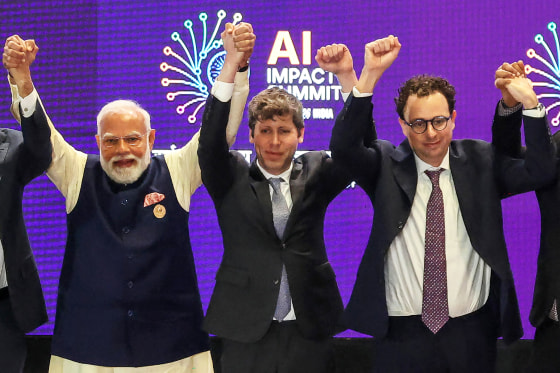
The mechanism behind this sovereign push is the requirement for "responsible and secure" AI adoption in the Asia-Pacific region. By providing a sandbox environment for proof-of-concepts, the factory allows Australian enterprises to experiment with high-performance sovereign capabilities without exposing data to international cloud jurisdictions. This trend is mirrored globally, as seen in the New Delhi Declaration on AI Impact, where 88 countries, including the United States, China, and France, agreed to pool resources for "democratic diffusion" of AI technology.
Sovereign Infrastructure Metric | Detail and Specification | |
Primary GPU Cluster | 1,024 NVIDIA Blackwell Ultra GPUs | |
Networking Architecture | Cisco Nexus Hyperfabric / Nexus One Plane | |
Storage Provider | VAST Data cutting-edge systems | |
Regulatory Alignment | Australia's National AI Plan | |
Market Participant | SharonAI Holdings Inc. (NASDAQ: SHAZ) |
The future outlook for these "AI factories" suggests a fragmentation of the global cloud market. Rather than a few centralized hyperscale providers dominating the world, national governments are increasingly incentivizing local neoclouds to ensure data sovereignty. This move is not merely technical but geopolitical, as nations seek to protect their domestic AI-enabled economies from external policy shifts or supply chain disruptions.
The India AI Impact Summit: A New Epicenter of Global Diffusion
While Australia focuses on infrastructure, India has solidified its role as the diplomatic and operational hub for AI in the "Global South." The India AI Impact Summit 2026, which concluded on February 20, 2026, resulted in multibillion-dollar deals that reshape the global competitive landscape. Microsoft’s announcement of a $50 billion investment in the Global South is perhaps the most significant, aimed at building the infrastructure required for multilingual and multicultural AI capabilities. This builds on Microsoft’s previous $17.5 billion commitment to India, signaling a long-term strategy to capture the next billion AI users in developing economies.
A critical operational development from the summit is the partnership between OpenAI and Tata Consultancy Services (TCS). TCS announced that OpenAI will be the inaugural customer for its "Hypervault" data center business, with an initial commitment of 100MW of AI capacity, scalable to 1GW. This project is part of OpenAI’s "Stargate" venture, a $500 billion privately-funded initiative to build a global network of AI data centers. Simultaneously, the Adani Group has committed $100 billion to a renewable-energy-powered data center fund, ensuring that the massive compute requirements of Google and Microsoft in India are met with sustainable power sources.
Summit Agreement | Stakeholders | Financial / Scale Detail | |
New Delhi Declaration | 88 Countries & International Orgs | Resource pooling for AI diffusion | |
Global South Pledge | Microsoft | $50 Billion Investment | |
Hypervault Deal | OpenAI and TCS (Tata Group) | 100MW to 1GW AI Capacity | |
Stargate Venture | OpenAI (Private Funding) | $500 Billion Global Initiative | |
Adani AI Fund | Adani Group | $100 Billion for Renewable Centers |
The implication of these deals is a shift in the AI power balance. As usage in the "Global North" is currently estimated to be twice that of the "Global South," these investments represent a massive effort to bridge the digital divide. For enterprise peers, the relevance lies in the localization of AI; models are being trained not just on English-centric data but on the linguistic and cultural nuances of India and surrounding regions, which will eventually lead to more robust and inclusive global AI standards.
Financial Volatility and the "Big Short" Warning
Despite the flurry of infrastructure announcements, the financial markets on February 23, 2026, have responded with caution. U.S. futures dropped and Bitcoin tumbled 5% as investors processed a "perfect storm" of geopolitical and financial signals. A central figure in this cooling sentiment is Michael Burry of Scion Asset Management, who issued a stark warning regarding what he terms a $660 billion AI infrastructure "binge". Burry, notorious for his 2008 subprime mortgage prediction, argues that major tech companies—Amazon, Alphabet, Meta, and Microsoft—are utilizing "accounting tricks" and "aggressive depreciation schedules" to mask the true cost of their AI investments.
The core of Burry’s critique is the discrepancy between the physical and economic lifespan of AI hardware. While hyperscalers typically depreciate data center equipment over 5 to 6 years, Burry argues that the rapid generational leaps in chips—such as NVIDIA’s Vera Rubin architecture performing five times better than the Blackwell GPUs—render current hardware obsolete within 2.5 to 3 years. This suggests that reported earnings could be significantly overstated.
For instance, Burry’s model for Microsoft suggests that if GPU life is 3 years instead of 6, annual earnings would be overstated by 11% to 14%. The accounting impact can be calculated as follows:
If C is the capital expenditure for GPUs, the annual depreciation D in a 6-year schedule is D1=6C, whereas in a 3-year schedule, it is D2=3C. The difference ΔD=D2−D1=6C represents the annual earnings overstatement. For Microsoft's $17 billion GPU purchase in 2024, this implies a ΔD≈$2.9 billion.
Company | Projected 2026 AI Spend | Burry’s Scrutiny Point | |
Amazon | $200 Billion | Capex exceeds cash from operations | |
Alphabet (Google) | $175 - $185 Billion | Quadrupled long-term debt; "Century Bond" | |
Microsoft | $150 - $160 Billion | 45% of cloud backlog from OpenAI | |
Meta | $100 - $110 Billion | Investing heavily in Llama/Social AI | |
Oracle | Included in Burry's List | Earnings overstated by up to 62% |
Burry further notes that the $500 billion Stargate project is reportedly stalled, with less than $10 billion in secured funding. He draws a historical parallel to the electricity boom of the late 19th century, where companies like Westinghouse and Edison faced bankruptcies before the industry stabilized, warning that aggressive over-funding often leads to the "wiping out" of early investors.
The Breakthrough of Agentic AI: From Chatbots to Coworkers
Technological trends on February 23, 2026, are dominated by the "Agentic AI" revolution. The market has moved past simple conversational bots (like early versions of ChatGPT) toward autonomous systems capable of reasoning, planning, and independent action. On February 7, 2026, both OpenAI and Anthropic released major updates that define this era. OpenAI launched GPT-5.3-Codex with a tool called "Frontier" to manage AI workers, while Anthropic released Claude Opus 4.6, featuring a one-million-token context window.
Agentic systems differ from earlier "copilots" in their ability to handle multi-step goals autonomously. Instead of asking an AI to write an email, an enterprise user in 2026 assigns an outcome, such as "resolve this supplier delay" or "stabilize inventory levels". The agent then determines the steps, accesses the necessary databases, and executes the solution. This has led to the emergence of "Multi-Agent Orchestration" platforms that serve as an enterprise control plane, governing how specialized agents collaborate and escalate issues.
AI Model / Tool | Developer | Defining 2026 Breakthrough | |
GPT-5.3-Codex | OpenAI | Frontier worker management tool | |
Claude Opus 4.6 | Anthropic | 1M token context; autonomous research | |
Gemini 3.1 Pro | Context-aware smart TV integration | ||
GLM-5 | Zhipu AI | Top-ranked open-source benchmark | |
Manus AI | Butterfly Effect | Task-execution in sandboxed environment |
A critical technical development supporting this is the Model Context Protocol (MCP), an open standard initially developed by Anthropic and now adopted by Microsoft, Google, and OpenAI. MCP allows AI agents to connect seamlessly to third-party tools and databases, effectively turning the AI into an "executive assistant" rather than just an "answer engine". The competitive landscape has bifurcated into "God Mode" models (flagship reasoning) and "Flash Mode" models (high-speed, low-cost inference), making mid-range models increasingly obsolete.
Specialized Intelligence: The Healthcare and Neuroscience Frontier
A significant trending topic regarding vertical AI is the launch of MANAS 1, a Brain Language Foundation Model developed in India. Trained on 60,000 hours of EEG recordings from over 25,000 patients, MANAS 1 is designed to interpret the "electrical language" of the brain to detect neurological and psychiatric disorders—such as epilepsy and dementia—before symptoms become visible on traditional tests like MRIs. This project, backed by the Indian AI Mission, signals a move from analyzing human language to analyzing biological signals.
Parallel to this, the biotech firm Manas AI (distinct from the Indian model) is using "Neuro-Symbolic" models to design entirely new molecules for drug discovery. Their "Project Cosmos" initiative aims to map the fundamental rules of drug binding to accelerate the creation of novel chemical entities. These breakthroughs demonstrate that AI’s greatest impact in 2026 is moving into high-stakes, domain-specific niches where hallucinations are unacceptable and "physics-informed" accuracy is paramount.
Specialized AI Advancement | Field | Technical Mechanism | |
MANAS 1 (NeuroDx) | Healthcare | EEG brainwave foundation model | |
Project Cosmos (Manas AI) | Biotech | Generative chemistry & drug binding | |
AIM Program | Medicine | Weill Cornell precision medicine initiative | |
Physics-Informed ML | Engineering | University of Hawaii physics algorithm | |
High-Pressure Simulation | Chemistry | Quantum mechanical reaction modeling |
For practitioners, the relevance of these specialized models is the shift away from "Black Box" AI. By codifying deep scientific rules into the neural network, researchers are creating systems that understand the "first principles" of their respective fields, leading to more reliable and verifiable outcomes than generalized models.
The AI-Native Workplace and Human Centricity
As AI agents become "digital coworkers," the human-centric aspect of AI has become a major theme at the World Economic Forum (WEF) and in HR technology circles. The WEF’s 2026 report, "AI at Work," highlights that while AI restructuring workflows has led to massive savings—such as a firm uncovering $120 million in tax savings in just three days—it has also created a "loss of connection" among employees.
There is a growing "effort-reward imbalance" in the 2026 workplace. As AI automates easy, repetitive tasks (the "easy wins"), employees are left with only high-impact, strategic work that is more difficult to measure and reward. This has led to a counter-movement among younger workers. In a 2025 AI Adoption Survey, 41% of millennial and Gen Z employees admitted they "actively sabotaged" company-wide AI programs because of unusable tools or fear of obsolescence.
Workplace Trend 2026 | Impact on Employees | Strategic HR Response | |
Agentic Invasion | Mid-level roles face progression pressure | Redefine org charts for hybrid teams | |
Unofficial Therapy | Workers use GenAI for emotional support | Formalize AI wellness & career tools | |
AI Sabotage | Resistance to rollout (41% of Gen Z) | Build culture/training before skills | |
Cognitive Risk | "Workslop" from low-quality AI outputs | Demand measurable returns & oversight | |
Talent Pipeline | Reskilling 1.1 billion people by 2030 | WEF 'Reskilling Revolution' initiative |
Organizations are responding by appointing "AI Governance" specialists and CHROs who focus on "Agentic Systems Management" alongside people management. The emerging consensus is that AI failure is often a human problem, where 90% of barriers are tied to culture and change management rather than the technology itself.
The New Search Paradigm: Agentic Commerce and SEO in 2026
For marketing and business development, the trending topic is the transition from "Search Engines" to "Generative Engines". About 800 million people per week now use ChatGPT to answer questions and compare options, leading to an estimated organic traffic drop of 15% to 64% for traditional websites. This has birthed "Agentic Commerce," where AI doesn't just recommend a product but executes the checkout on behalf of the user.
To reach the masses in 2026, companies are optimizing for "Zero-Visit Visibility." This involves ensuring a brand is interpreted correctly by AI agents even if the user never visits the company's website. SEO strategies have shifted from keyword stuffing to "Machine-Readable Identity," where the first 150 to 200 words of a landing page are critical for AI extraction.
SEO / Marketing Shift | 2024 Strategy | 2026 Strategy (Agentic Era) | |
Search Intent | Informational Clicks | Action-Oriented Task Completion | |
Primary Content | Long-form Text | Multi-modal (Video/Annotated Images) | |
Performance KPI | SERP Position | AI Inclusion & Summary Trust | |
Data Strategy | Generic Blog Posts | Proprietary First-Party Data Moats | |
Brand Footprint | Scattered Listings | Identical Identity Across All Nodes |
Peer advice for 2026 marketing emphasizes that "Clarity beats Production Value." AI models prioritize content that removes uncertainty, such as video walkthroughs with transcripts and structured case studies. Brands that fail to provide real-time, machine-readable pricing and availability data will simply be skipped by AI agents in favor of more transparent competitors.
High-Impact, Low-Competition Keywords for 2026 Ranking
To effectively reach the masses, content must target the specific "exploding" topics identified in early 2026. While broad terms like "AI" are oversaturated, specialized long-tail queries and new product categories offer significant opportunities for ranking. The following keywords show massive search growth but currently face moderate to low competition in the specialized agentic niche:
Trending Keyword (Feb 2026) | 5-Year Search Growth | Competition Level | Strategy | |
AI Image Enhancer | 8,100% | Moderate | Target "upscaling for design" | |
AI Video Generator | 8,300% | High/Regular | Target "automated marketing video" | |
AI for Teachers | 4,000% | Low/Moderate | Focus on administrative automation | |
Non-Toxic Air Fryer | 9,900% | Low | Health-conscious lifestyle niche | |
Japanese Head Spa | 9,000% | Low | Wellness and holistic health trend | |
AI Voice Detector | 4,000% | Low | Cybersecurity/Anti-scam awareness | |
Agentic Commerce | New Term | Low | Optimize for "AI autonomous buying" |
Targeting "Natural Language Keywords" (Who, What, How, Why) is particularly effective for AI Overviews, which now cover many informational queries. The goal is to build "Topical Authority" through clusters—for example, a series of articles on "Sovereign AI Infrastructure" that links to local data center trends and regulatory compliance.
Geopolitical Shifts and the "Trump Tariff" Volatility
On the morning of February 23, 2026, global markets were further roiled by the U.S. Supreme Court’s decision to strike down several of President Donald Trump’s tariffs. In response, the President announced a blanket 15% levy for 150 days on all goods imported into the U.S.. This has created a "winners-and-losers" effect, benefiting countries that had previously secured favorable trade deals while injecting a massive dose of uncertainty into the AI supply chain.
This volatility has immediate relevance for tech companies reliant on overseas chip assembly and data center hardware. The market reaction—a surge in the Hang Seng but a shed in the S&P/ASX 200—highlights how tariff shifts can deliver a sudden boost or blow to countries based on their integration into the "AI Economy".
Market Index | Feb 23 Morning Reaction | Primary Driver | |
Hang Seng (Hong Kong) | +2.2% | Shift in tariff policy advantage | |
S&P/ASX 200 (Australia) | -0.6% | Regional uncertainty | |
Bitcoin | -5.0% | Exit from speculative assets | |
NVIDIA Stock | Consolidation / Strong Buy | Focus on Q4 earnings & Rubin chips | |
Intuit Stock | Strong Sell | Fundamental technical headwinds |
The future outlook for U.S. tech giants is tied to their ability to navigate this "movable" trade policy. Companies like NVIDIA, which are heading into earnings releases with strong visibility into 2026/2027 growth from the "Rubin" architecture, may remain resilient, but the broader market is increasingly skittish about the high valuation of AI-backed stocks in a protectionist trade environment.
Conclusion: Navigating the Year of Efficient Intelligence
As of February 23, 2026, the AI industry has reached a point of "Inference over Training" and "Smart over Big". The era of mindless scaling—training ever-larger models with trillions of parameters—is giving way to a focus on specialized, efficient, and agentic systems that can be integrated into the real-world economy. The "Sovereign AI" movement in Australia and India, the "Agentic Revolution" in enterprise software, and the "Burry Correction" in financial accounting are all symptoms of a technology that is maturing.
For the peer audience of researchers, analysts, and business leaders, the takeaway is clear: 2026 is not about testing new tools, but about operating inside an ecosystem where AI defines how customers search, how employees work, and how nations secure their digital futures. Success in this environment requires a transition from pilots to production, a demand for measurable ROI, and a commitment to human-centric governance that can withstand both technical and cultural resistance.
The "New Delhi Declaration" and the launch of domestic factories like the Cisco-SharonAI project serve as the blueprint for this new era: an AI economy that is decentralized, specialized, and, above all, integrated into the sovereign fabric of the global community. Those who master the "Agentic Web" and "Physics-Informed Discovery" while maintaining financial transparency will be the ones who define the second half of the 2020s.
Sharon AI & Cisco Launch Australia’s First Cisco Secure AI Factory with NVIDIA
AI Trends in 2026: A New Era of AI Advancements and Breakthroughs - Trigyn Technologies
America's biggest investor Michael Burry has an 'End question' for ...
The future of AI search: What 6 SEO leaders predict for 2026 - Search Engine Land
US futures, bitcoin fall and Asian markets are mixed after the Supreme Court nixes Trump's tariffs
Big Tech announces multibillion-dollar deals at India's AI summit
Understanding Michael Burry's Nvidia short: The real thesis explained - Reddit
The Best AI Stock to Buy in February 2026: A Once-in-a-Decade Investment Opportunity
AI and the Economy: A Losing Bet for Working People - Socialist Project
Michael Burry Sounds AI Bubble Alarm, Questions Tech Companies' Revenue Claims
Latest AI & Technology News Roundup – February 2026 - VT Netzwelt
Top 10 Agentic AI Trends for 2026: What Most Enterprises Will Get Wrong - Futuria
One-Minute Daily AI News 2/19/2026 : r/ArtificialInteligence - Reddit
Latest AI News and AI Breakthroughs that Matter Most: 2026 & 2025 | News - Crescendo.ai
Manas AI: The Ultimate Guide to the Tools Revolutionizing AI
I benchmarked the newest 40 AI models (Feb 2026) : r/LocalLLaMA - Reddit
Manas 1: India unveils 'MANAS 1': AI trained on 60,000 hours of ...
What's next in AI: 7 trends to watch in 2026 - Microsoft Source
WEF 2026: How AI is Impacting Jobs and the Workplace | AI Magazine
AI is becoming your new work colleague. But let's not forget the human ones
11 ways AI will reinvent the workplace in 2026 | Walterboro Live
The Executive Download: HR Technology Trends, February 2026
Invest in the workforce for the AI age: A blueprint for scale, skills and responsible growth
The Biggest AI Marketing Trends for 2026 | WordStream
Top Trending Topics (February 2026) - Exploding Topics
1 Stock to Buy, 1 Stock to Sell This Week: Nvidia, Intuit | Investing.com
Discussion
No comments yet. Be the first to share your thoughts.
Leave a Comment
Your email is never displayed. Max 3 comments per 5 minutes.